
Have you ever thought that a market slump might hide a bright opportunity? When the economy takes a downturn, it can feel like your investments are losing value very quickly. In some cases, losses can reach around 35%, even making your safest bets look a bit risky. But here’s the silver lining: by changing the way you invest, you might uncover surprising chances to grow your money. It’s a reminder that even in hard times, there can be hope. Have you ever considered that a small change in your strategy could protect your savings when things get shaky?
Understanding Market Risk in Recessionary Periods

Market risk is really just the chance of losing money when times get tough. In a recession (that means two straight quarters of falling real GDP), investors can see the market mood shift quickly. When jobs are hard to come by, people cut back on spending, and businesses slow down on investments, uncertainty fills the air and prices can jump up and down in a heartbeat.
During these economic slowdowns, even steady investments might seem unpredictable. Investors often feel a bit uneasy and start to reevaluate their risks. They might choose to rebalance their portfolios, which is like adjusting your garden when a storm comes, to help protect against big losses.
Recessions come with specific signs: falling GDP over two quarters, higher unemployment, less consumer spending, and lower business investments.
Market risk during a recession: Bright Outlook

When the economy takes a downturn, market risks tend to show up in big ways. In rough bear markets, losses hit an average of about 35% compared to around 22% during calmer times. This means that when doubts spike, asset values drop quickly, and investors end up having to review their portfolios and the risks they carry.
Have you ever heard of an inverted yield curve? It’s a signal that pops up in every recessionary bear market. Essentially, this happens when investors see the long-term future as bleaker than the near term, which can lead to sharper drops in market values and a more cautious approach to investing.
During these tough cycles, the CAPE ratio, a measure that smooths out earnings fluctuations and gives us a steadier view compared to the regular price-to-earnings ratio, tends to get lower. This was especially noticeable during the 2008 crisis. If you’re curious to dive deeper, detailed case studies and historic data are available at financial analysis sites like the one here: https://moneyrepo.com?p=1107.
Key Drivers of Market Risk During a Recession
During a recession, various warning signals hint at the rough economic road ahead. When we see a flipped yield curve (that is, short-term interest rates higher than long-term ones), it tells us that risk is on the rise and market stability might soon falter. We also witness shrinking company earnings, like the startling 92% drop in 2008, which makes investors extra wary about where they put their money. All these factors can lead to sudden and steep changes in asset prices that might even upset the best-laid plans.
Other things that squeeze the market include sudden jumps in loan defaults and cash flow problems, which mean funds become scarce exactly when you need them most. Shifts in investor feelings can make even small changes seem huge, triggering big price swings. And then there are changes in government money rules and spending plans, which can either ease the situation or make it worse by shaking market confidence.
- Yield-curve inversion
- Corporate earnings decline
- Credit-market stress
- Liquidity challenges
- Policy-response uncertainty
Techniques for Assessing Market Risk in Downturns

Economists often mix big-picture numbers such as GDP and unemployment with quicker market cues like the VIX and yield spreads to sense when trouble might be brewing. For example, when the yield curve flips, it's like a little warning sign that things could get tougher. Using simple forecasting methods, including GDP-growth guesses and this inverted yield-curve check, can make the complex world of economics feel much more understandable.
Another way to check for risk is stress testing, which is like running a simulation of past recessions on your portfolio. This method helps investors see what might happen to their money if the economy really hits hard. With tools like the CAPE ratio and VIX index, you get a clear look at market bumps and jitters, making the idea of financial stability feel as familiar as checking your pulse.
By pairing these forecasting ideas with stress tests, advisors and investors get a clearer view of what lies ahead during downturns. Looking at both big economic trends and the latest market signals helps everyone understand how a recession might affect asset values. In a nutshell, these techniques not only measure risk right now but also help plan smart moves to protect your investments when the economy takes a hit.
Sector Resilience and Market Risk Exposure in Recessions
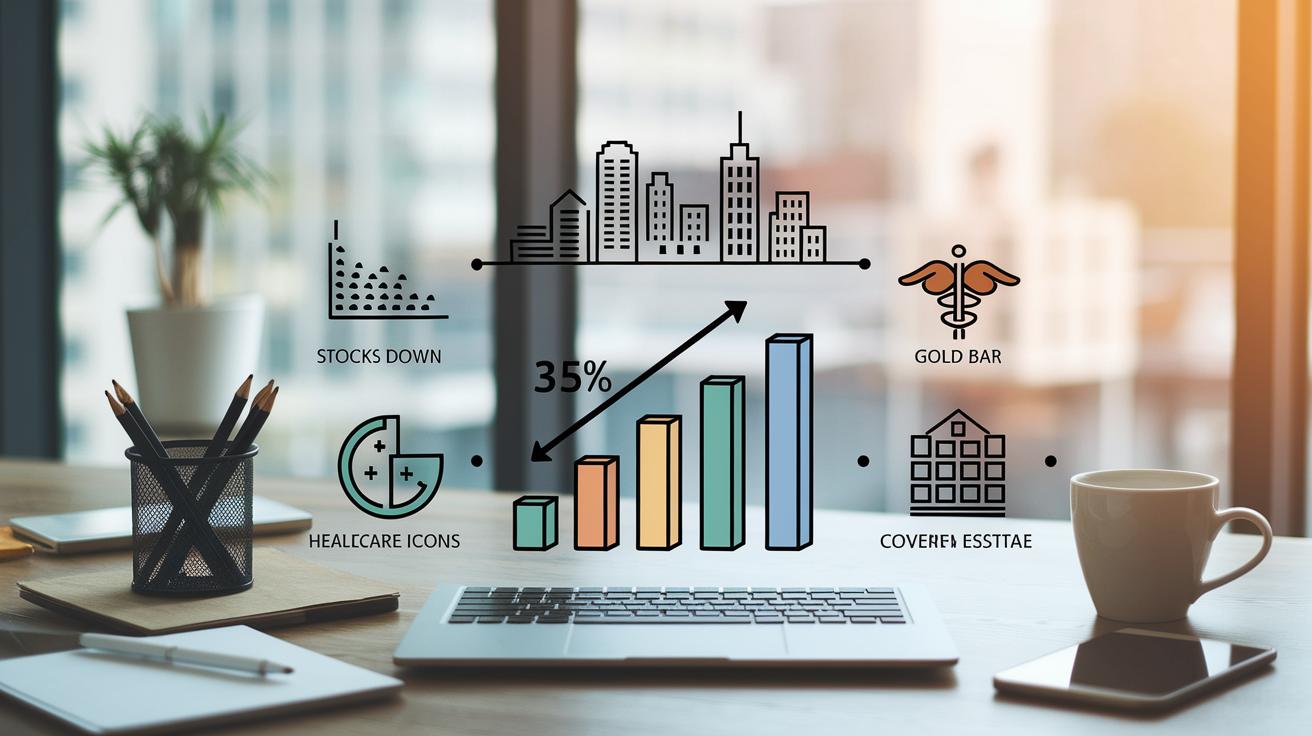
When the economy takes a hit, every type of investment behaves a bit differently. For instance, stocks might drop by about 35% because the market can swing wildly during tough times. Meanwhile, government bonds often step in like a safety net, bouncing back when uncertainty peaks. Precious metals keep their value and help protect against rising prices, and real estate remains steady because there’s always a need for homes and offices. Sectors like healthcare and everyday essentials also tend to hold their ground since people always need these crucial services, even when money is tight.
Mixing these investments together can help smooth out the bumps in your portfolio and keep your cash flow steady. This balanced approach is a practical guide to managing your money during economic downturns.
| Asset Class | Typical Recession Performance | Resilience Factor |
|---|---|---|
| Equities | Can drop around 35% | Prone to market swings |
| Government Bonds | Often rally as safe havens | Strong defensive play |
| Precious Metals | Maintain value during downturns | Good hedge against inflation |
| Real Estate | Holds intrinsic value | Stable tangible asset |
| Healthcare & Consumer Staples | Tend to perform better in slumps | Always in demand |
For more insights on defensive sector allocations, check out risk management best practices.
Strategies for Mitigating Market Risk During a Recession

One smart way to lower risk during a downturn is by using dollar-cost averaging. Instead of stressing about finding the best time to invest, you put in the same amount of money at regular intervals. This steady approach helps balance your overall entry price over time, making it easier to handle price swings during rocky markets.
Another helpful tactic is to hold onto some cash and invest in U.S. Treasury bonds. Keeping a rainy-day fund means you’re ready to buy when prices drop. Many managers also plan for different scenarios and adjust their investments as economic signals change. These flexible strategies act like safety nets, so you can switch gears quickly when needed.
Using options, like puts, is a practical move too. These financial tools are designed to protect your portfolio if markets take a downturn. Many investors also lean toward low-volatility and high-dividend assets because they generally stay steadier when the market feels uncertain. Mixing these tactics helps keep your money safer even if stock prices stumble.
No single method can completely shield you from a recession, but combining these strategies can reduce your overall risk. By balancing various defensive moves, you create a more stable approach that leaves you ready to seize good market opportunities when they come.
Market risk during a recession: Historical Insights

2008 Financial Crisis
Back in 2008, the markets took a pretty rough hit, with losses reaching about 35% on average. An early hint of the troubles ahead was an inverted yield curve, a fancy way of saying that short-term interest rates were higher than long-term ones. This signal is like noticing dark clouds gathering before a heavy rain. Also, experts used the CAPE ratio (a tool that smooths out bumps in earnings to give a clearer picture) as a gentle nudge that more stormy weather was coming.
COVID-19 Recession
When the COVID-19 hit, the market dropped very quickly, almost like a steep dive, as many businesses were forced to shut down during lockdowns. But then, thanks to fast government cash infusions and new rules, things turned around quickly, imagine your car stopping for a pit stop and then speeding up again. This rebound was as surprising as it was impressive, reminding us that even in a sudden storm, help can come fast.
For more on what’s happening in the market, check out investment insights current financial trends.
Final Words
In the action, we covered the basics of handling market risk during a recession and discussed historical trends, key drivers, and techniques for assessing economic challenges.
We stepped through how sector resilience and smart strategies can help limit losses and keep portfolios balanced. Our case studies of past downturns remind us that proactive steps build a stronger foundation for financial success.
Stay optimistic and keep advancing your financial know-how to create a brighter future.
FAQ
How to get rich during a recession
Getting rich during a recession involves carefully investing in undervalued opportunities, reducing unnecessary costs, and holding a long-term view while balancing your portfolio to manage risks effectively.
Interest rates during recession 2008
Interest rates during the 2008 recession dropped as central banks lowered rates to stimulate the economy, which made borrowing cheaper and helped ease financial pressures.
What happens in a recession to the stock market
In a recession, the stock market often experiences increased volatility, falling prices, and reduced investor confidence, which can lead to significant declines in market value.
What happens in a recession to house prices
During a recession, house prices may slow in growth or decline because reduced consumer spending and cautious lending practices lead to lower demand.
Chances of a recession in 2026
The chances of a recession in 2026 depend on various economic signals and policy actions, so monitoring indicators like GDP and yield curves can help assess potential downturn risks.
How to prepare for a recession in 2025
Preparing for a recession in 2025 means building an emergency fund, reducing debt, and diversifying investments to protect against economic slowdowns and market fluctuations.
Mortgage rates during recession 2008
Mortgage rates during the 2008 recession typically fell as lenders reduced rates to boost borrowing, making home financing more affordable for qualified buyers.
What gets cheaper during a recession
During a recession, assets like certain stocks, real estate, and commodities can become cheaper as lower demand and increased caution drive down prices, offering potential value buys.
How much do markets fall in a recession?
Markets can fall significantly in a recession, often experiencing drawdowns of 30-35% during severe downturns as heightened volatility and risk drive prices lower.
What are the risks of a recession?
A recession brings risks such as job losses, lower consumer spending, declining asset values, and overall uncertainty, which can impact both personal finances and investment portfolios.
Is it a good time to buy stocks during a recession?
Buying stocks during a recession can be smart if you focus on quality companies at lower prices, but it involves careful research and a willingness to hold for long-term growth.
What happens to the S&P 500 during a recession?
The S&P 500 typically declines during a recession as economic weakness and uncertainty lead to lower earnings and reduced investor confidence, impacting overall market performance.