

Have you ever wondered if a simple set of numbers could guide your financial journey? Think of these models as trusty maps that help you navigate a market that can change in the blink of an eye. They use everyday math and real data to spot small shifts before they grow into big surprises. This smart approach gives everyone, from small business owners to big institutions, the guts to make sound decisions. In this article, we'll chat about how these models can smooth out the ups and downs of the market and help build confidence in your financial choices.
Quantitative Market Risk Models: Definitions, Scope, and Importance
Market risk is the chance you might lose money because market values can swing wildly. In plain terms, it’s like riding a roller coaster with interest rates, currencies, stock prices, and commodity values. For a quick look at this concept, check out What Is Market Risk. Nearly every asset and deal holds this risk, which means whether you're a small business owner or a big institutional investor, you need to be mindful of these ups and downs.
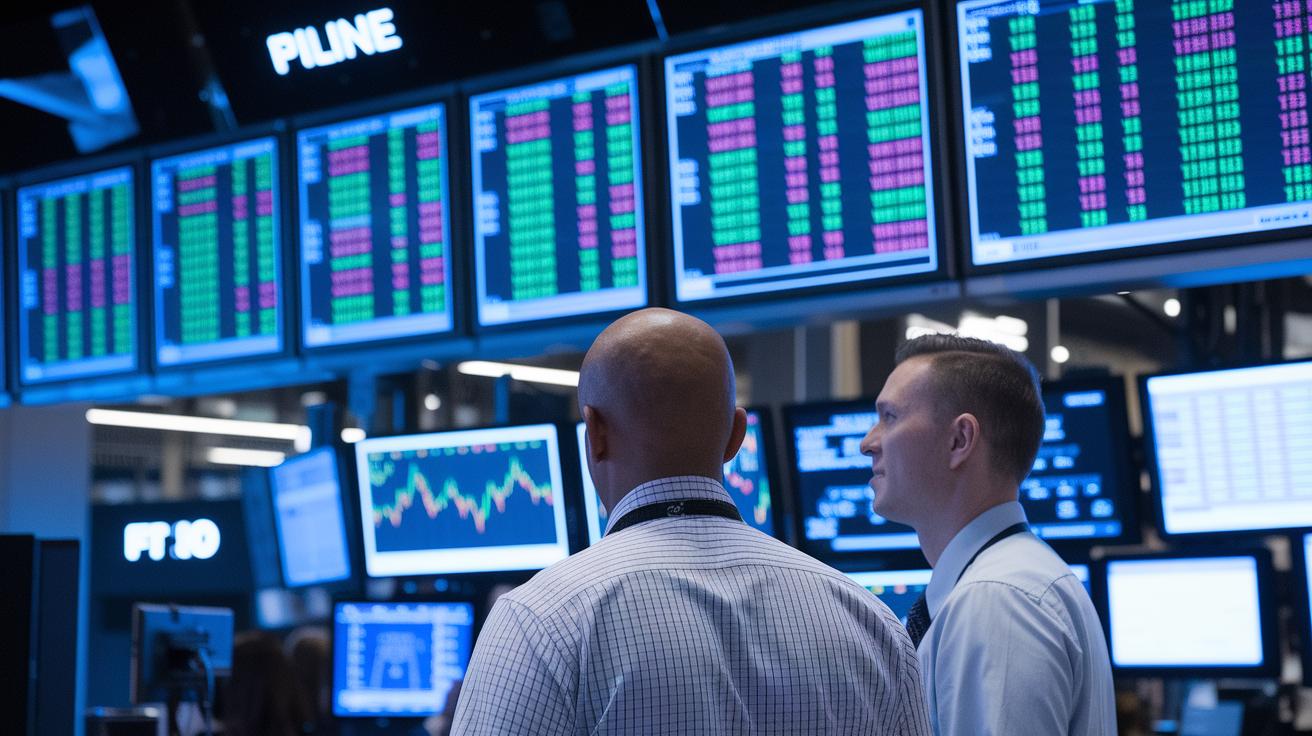
As finance advanced and technology took over, we moved from busy trading floors to digital screens bursting with data. Nowadays, experts, often called quants, use statistical tools and smart software to build models that keep track of market risk. Picture a model that combs through millions of data points to catch tiny price changes before they turn into big problems. With real-time info in hand, investors can adjust their strategies quickly and confidently.
Using reliable, model-based measurements is essential in today’s financial world. By leaning on these quantitative methods, both finance professionals and eager learners can better understand how different investments mix and how outside forces might influence a portfolio. This thoughtful approach helps uncover hidden risks and guides smart decision-making. In other words, these techniques not only help prevent losses but also build confidence in handling the ever-changing market landscape.
Core Quantitative Market Risk Modeling Methodologies

Risk models are like trusted maps on a long journey. They help us understand and manage the unknowns in financial markets. When we use methods built on strong math and statistics, we feel more secure knowing we aren’t missing hidden dangers even when the market is complicated.
Value at Risk (VaR)
VaR is a way to guess the biggest loss you might face over a certain time with a chosen level of confidence. This method can use math formulas that assume price changes follow a known pattern or it can look back at real past data. Imagine saying there’s only a small chance, like 5%, that your losses will go above a certain amount. It’s a simple way to see how risky things might get.
Expected Shortfall
Expected Shortfall takes things a step further by showing the average loss if things go really wrong, beyond what VaR tells you. Think of it like looking at the worst of the worst cases. This method is now preferred by many because it gives a fuller picture of the serious risks you might face.
Historical Simulation Models
Historical simulation uses real past market behavior to predict what might happen with a current portfolio. It takes actual market movements and applies them to today’s data without assuming any special patterns. This makes it a straightforward and familiar way to look at risk.
Monte Carlo Simulation
Monte Carlo simulation is like running a huge number of “what if” scenarios. It randomly picks numbers for key factors to create thousands of different outcomes. This lets you see a wide range of possible future scenarios. As you run more simulations, the results become more reliable, much like watching a movie that builds up detail scene by scene.
| Model | Core Assumptions | Primary Use |
|---|---|---|
| VaR | Assumes a defined statistical distribution | Estimate maximum loss at a chosen confidence level |
| Expected Shortfall | Averages tail losses | Measure extreme losses beyond VaR |
| Historical Simulation | Based on past return data | Model risk using real market history |
| Monte Carlo Simulation | Relies on random sampling and large data sets | Generate many risk scenarios to see diverse outcomes |
Calibration, Backtesting, and Model Validation in Market Risk Models

Calibration is all about giving your model a little tune-up using past market data. Experts start by fine-tuning the model’s settings and then checking how well its results match what really happened. They often let computer routines sift through historical data, making sure the model’s assumptions mirror today’s market trends and produce solid estimates.
Below are some key tests used to check how well the model performs:
| Test Type | What It Does |
|---|---|
| Hit rate tests | Check how often the predicted events actually occur |
| Coverage tests | Confirm that real losses fall within the predicted ranges |
| Loss exceedance evaluations | Compare the worst predicted losses with those that really happen |
| Confidence interval assessments | See if the model’s forecasts stay within the expected range |
| Forecast error analysis | Measure how far the predictions stray from actual values |
Solid model validation also relies on careful backtesting of risk models. Under rules like SR 11-7, banks and financial firms must write down every step, from picking the data inputs to the final model results. This strict process makes sure every model gets an independent review and that its performance is tracked closely. Tools like ProSight Model Validation help simplify this process, keeping everything transparent and accountable. For more details on proper oversight and testing practices, check out the Risk Management Best Practices page.
Stress Testing and Scenario Analysis for Quantitative Market Risk

Banks today are required by rules like FRTB to run what we can think of as financial "stress tests." These tests mimic very tough market conditions, extreme but possible events, to see how bank portfolios might suffer losses. Banks build their own systems to look beyond the usual market ups and downs. In doing so, they add extra steps and sometimes extra cost to their work. But this extra work is valuable. It helps spot weaknesses that simpler models, like Value at Risk (VaR, which predicts potential losses under normal conditions), might miss.
Analysts design a range of different what-if scenarios to stress out portfolios. They pretend that different parts of the market hit a rough patch at the same time. By mapping out these varied shock events, they create a "stress-loss distribution" that shows how losses might spread across the portfolio. Risk aggregation methods then pool these shocks from different assets to give a full picture of possible losses. This clear view helps decision-makers set aside the right amount of capital and tweak their risk plans when sudden market downturns occur.
Regulatory Frameworks and Model Risk Oversight for Market Risk Models

FRTB has changed the game when it comes to measuring market risk. Instead of just guessing potential losses in the old way, banks now use something called expected shortfall, which is simply an average of the worst possible losses. This means banks must run tougher tests and update how they catch those rare, heavy losses that can really hurt. Banks now stick to stricter rules and set up better systems to match new trading-book capital requirements. In short, this new method makes sure risk reports cover every possible loss, making it easier for analysts and managers to keep an eye on any weak spots in their portfolios.
SR11-7 is another big part of keeping model risk in check. It lays out clear steps for everything from creating models to checking how well they work over time. Companies are encouraged to write down their core assumptions and regularly test their results, which not only comforts everyone involved but also boosts their internal controls. By focusing on constant monitoring and clear risk reporting, SR11-7 helps firms stick to strong standards that protect them from sudden market changes.
Real-World Applications and Case Studies of Quantitative Market Risk Models

Joseph Iraci from Robinhood Markets recently shared how his firm uses quantitative market risk models in large-scale trading and audits. He explained that by using a tool called Value at Risk (VaR), which helps predict possible losses in a portfolio, they can see where things might go wrong. Plus, they run tough stress tests that show them where their methods for managing complex financial tools need a little extra work. Even when the market gets unpredictable, these models do a solid job of checking how easily assets can be bought or sold, letting them tweak their risk strategies as needed.
Many financial companies are now turning to smart, software-based tools that offer real-time financial insights for trading. They use parts of the ProSight product suite, like ProSight Credit Risk Navigator and ProSight Risk Rating Solutions, to keep a close eye on portfolio risks and fine-tune how they handle risks from derivatives (financial contracts whose value comes from an underlying asset). These platforms help track changes in market liquidity and boost overall risk management analytics, making sure strategies stay current as market conditions change.
What we learn from these experiences is that blending strong quantitative models with modern analytics makes for better risk management. Firms have found that using automated systems speeds up decision-making and sharpens the accuracy of their portfolio and derivatives risk models. This disciplined approach builds confidence, leading to noticeable gains and more steady performance in live trading sessions.
quantitative market risk models Spark Confidence

Today, quantitative market risk models have really stepped up their game. Experts now use extreme value theory, which helps check for rare, extreme changes in the market, to take a closer look at tail risk. They also rely on regime-switching models, which adjust to different phases of the market, almost like switching from a sunny day to a stormy one. By mixing in techniques like stochastic modeling (that uses random data to predict future trends) and volatility modeling (which shows how much prices might wiggle), these tools stay flexible and responsive to real-time market shifts. And with machine learning joining in, predictive analytics update risk forecasts as new trends appear, making it easier to understand even the twisty, unpredictable behaviors of the market.
Data visualization is another key part of today’s risk management toolkit. Think of it as turning complex numbers into bright, interactive charts and graphs on a clear dashboard. This makes spotting trends and potential risks as simple as reading your favorite map. With these visuals, everyone from small business owners to large stakeholders can make smarter decisions, feeling more confident about using these modern, model-based strategies.
Final Words
In the action, we tackled everything from defining market risk to the evolution of model-based analysis. We unraveled how methodologies like VaR, expected shortfall, and Monte Carlo simulation work side by side with calibration, backtesting, and stress testing. Key regulatory frameworks also set the stage for careful oversight. This guide shows how mastering quantitative market risk models can spark confident financial decisions and inspire a further deepening of market insights. Stay committed and excited as you explore new horizons in your financial planning.