

Ever wondered if your retirement plan is really giving you the safety net you need? Teachers have a special mix of steady pensions and savings plans that work hand in hand, almost like two parts of a well-tended garden. In this post, we'll chat about how pension benefits and options like 403(b) or 457(b) (basically plans that help you save for retirement by letting you set aside money with tax advantages) can build a strong financial base after your years in the classroom.
It might seem tricky at first to balance regular savings with your pension, but with a little planning, you can find a way that brings both security and growth to your money. So, why not take a moment to explore how you can start securing your future today?
Achieve a Secure Retirement: Step-by-Step Planning for Teachers
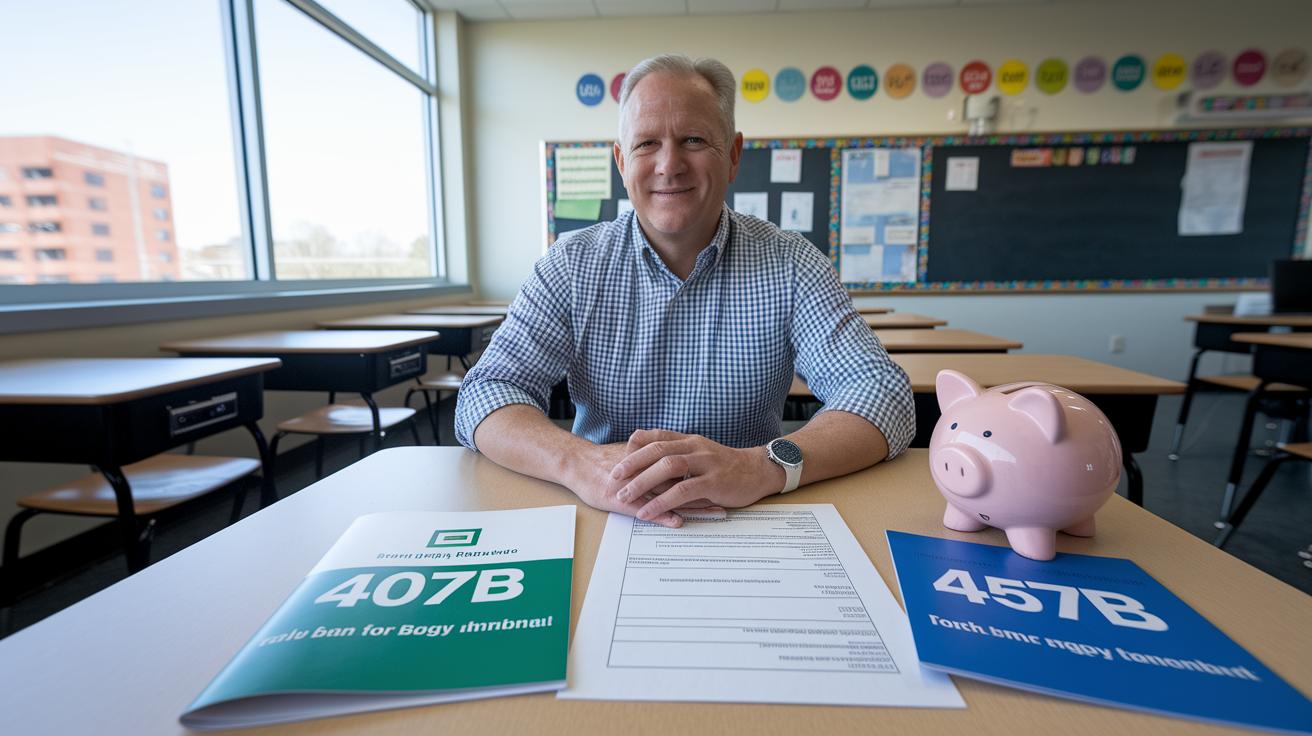
Teacher retirement planning means mixing the comfort of a pension with the proactive habit of saving and investing. Some teachers have defined benefit plans that guarantee a set income based on their salary and years of service, while plans like 403(b) and 457(b) let you put away pre-tax money, up to $23,000 in 2024, to build a personal nest egg. This balance gives you the steady security of a pension and the chance to watch your personal contributions grow over time.
Saving around 15% of your earnings is a solid idea. Regular deposits into your retirement accounts let your money grow without being hit by taxes right away. Relying on just one source of income can leave some gaps, so adding your own savings to your pension builds a friendly cushion for the future. Think of it like laying down a steady, strong foundation for your long-term financial dreams.
- First, figure out how much income you’ll need by thinking about everyday costs and the kind of retirement lifestyle you want.
- Next, list all your available retirement plans, including both pension options and pay-as-you-go savings plans.
- Then, try to save about 15% of your earnings regularly.
- Finally, check your retirement plan every year and adjust your savings or investments when you need to.
Planning for retirement as a teacher is a journey that brings together the safety of a pension with the growth of personal savings. When you understand your options and commit to regular contributions, you build a strong stepping stone toward a comfortable future.
Pension Plans and Contribution Rules for Teachers

If you’re a teacher, your pension plan will generally fall into one of two categories: defined benefit or defined contribution. In a defined benefit plan, you receive a steady, lifetime annuity that is calculated based on your salary history and the number of years you’ve worked. With a defined contribution plan, you invest your own money, and your benefit grows over time with your investments. Many educators need to check their service records to ensure they meet the necessary requirements. For example, in Pennsylvania, only about 36% of new teachers have enough service years to qualify, with an average pension of $24,603. So, it makes sense to compare your public school pension options and use smart strategies to get the best setup for your future.
| Plan Type | Eligibility | Benefit Calculation |
|---|---|---|
| Defined Benefit | Typically requires 5-10 years of service | Based on salary history and service length |
| Defined Contribution | Varies by plan design | Depends on contributions and investment returns |
| 403(b)/457(b) | Available to eligible educators | Pre-tax contributions with tax-deferred growth |
It helps to keep a close eye on your service record because those years directly affect your pension eligibility. Regularly checking your record means you can catch any updates to public school pension options and decide if you need to save more on the side. Staying informed about both defined benefit and defined contribution plans lets you adjust your savings plan as your career goes on. Tracking these details now means you can make more confident choices about your retirement later on.
Maximizing 403(b), 457(b), and IRA Savings for Teachers

If you're a teacher, think of a 403(b) plan as your version of a 401(k). It lets you set aside part of your paycheck before taxes, and in 2024 you can save up to $23,000. Often, your employer might even chip in with a matching contribution to boost your savings. Similarly, a 457(b) plan comes with the same tax advantages, offering another way to save while lowering your taxable income. Your investments get a chance to grow without getting hit by taxes right away.
Before you lock in annuities, take a close look at the fees. A fixed return like a 2% yield might not do much over the long haul if you’re aiming for real growth. Sometimes, an IRA or another deferred option could be a smarter, more affordable way to build your retirement fund. It really helps to review fees, investment choices, and any employer giveaways, because these small details add up over years.
- Tax deferral helps lower your taxable income.
- Employer matches can add extra dollars to your savings.
- High fees may slow down your overall growth.
- A variety of investment options lets you tailor your plan.
- Portability means you can take your savings with you if you change jobs.
Choosing the right blend of these strategies is key to laying a strong foundation for your retirement. Balancing the benefits while keeping fees in check can help you build a secure future that fits perfectly with your teaching career.
Developing a 15% Savings Strategy for Teacher Retirement

Setting aside 15% of your paycheck can help you build a solid nest egg while keeping future possibilities wide open. Think of it like tending to a garden, regular watering, even on cloudy days, makes sure it keeps flourishing. Many experts recommend saving between 10% and 15% so that by the time you reach 65, you could be looking at a nest egg that approaches $1 million.
Calculating this is really simple. For instance, if you earn $3,000 each month, allocating 15% means you are putting $450 into your retirement savings. A handy trick is to set a reminder on your phone or jot down a note that says, "Save $450 from each paycheck." Over time, these amounts add up and steer you closer to secure financial freedom.
Automating your savings is another smart trick. By setting up a direct transfer from your paycheck into your retirement account, you remove the need to remember each month. This effortless routine leaves you free to focus on your teaching, all while knowing that your retirement plan is steadily growing.
Diversifying Income Streams: Investment Options for Teacher Retirement

Spreading your money across different investments is a smart way to build a comfortable retirement plan. Instead of relying on just your pension, imagine placing your savings into several baskets. When one basket has a tough time, the others can help keep things steady.
Consider mixing in assets like stocks, bond funds (these work by lending money to large companies or governments and usually come with less risk), real estate, and even cash options such as money market mutual funds. Each of these investments behaves differently when the market changes, which can smooth out your overall growth.
Here are some practical options to think about:
- Index funds – They let you own a bit of the whole market with low fees.
- Target-date funds – These adjust their mix of investments as you get closer to retirement.
- Bonds – They provide a steadier income and can help lower overall risk in your portfolio.
- Real estate – These are tangible investments that may increase in value and can even earn rental income.
- Cash equivalents – They help you keep some money handy in liquid accounts, like money market mutual funds.
Don’t forget to check on your investments regularly. If one part of your portfolio grows faster than others, shifting some funds back into the mix will help keep your strategy balanced and prepared to support your retirement dreams.
Navigating Social Security and Government Pension Offset for Educators

Many public school employees face different Social Security rules depending on where they live. Since 1950, some states have allowed teachers to count on Social Security, while others have not. This means your state’s policy may decide if you’re eligible for traditional Social Security benefits. It really helps to know your state’s position so you can decide whether to depend on Social Security or focus on building your own retirement savings.
The Government Pension Offset, often called GPO, also plays a big role. If your pension isn’t tied to Social Security contributions, the GPO reduces a spouse’s Social Security benefit by two-thirds of your monthly pension. That can really change your expected income during retirement. Have you ever wondered how this might affect your household? It means you need to carefully plan and adjust your income projections for those potential cuts.
- Check your state’s Social Security rules for educators.
- Figure out how the GPO might lower spousal benefits.
- Plan spousal benefits while keeping these changes in mind.
- Update your income estimates to include any potential offsets.
Planning for Healthcare Costs and Medicare Enrollment in Teacher Retirement

Thinking ahead about your health care is crucial when you're nearing retirement. Starting early gives you time to figure out how you'll cover rising medical costs before Medicare kicks in at 65. This way, you can set aside some funds and explore different coverage options that fit your needs, so unexpected bills don’t catch you off guard.
Here are some options you might consider:
- Employer plan extension
- ACA marketplace
- Retiree plan
Medicare enrollment is a key part of this planning. You have a seven-month window around your 65th birthday , three months before and three months after, including your birth month , to sign up. Missing this window could result in penalties and gaps in your coverage. Keeping a close eye on these dates lets you decide whether to stick with your employer’s coverage a little longer or pick an interim plan, ensuring you stay fully protected as you step into retirement.
Essential Resources and Professional Guidance for Teacher Retirement Planning

Planning your retirement as a teacher can be much easier with the right tools and advice. When you have easy-to-use retirement income calculators, friendly checklists, interactive webinars, and fee-only professionals by your side, you can set clear goals and follow your progress every step of the way.
Calculators help you see what your retirement income might look like based on your current savings.
Checklists break down each task into simple, step-by-step actions so nothing is missed.
Webinars give you a chance to learn from experts in teacher-focused financial planning.
Advisors provide straightforward advice without the worry of commission bias, they truly work for you.
Using these tools turns tricky numbers and paperwork into manageable, bite-sized tasks. It feels a bit like turning a complicated puzzle into a clear picture. And when you work with fee-only advisors, you get honest guidance that fits your unique financial needs. With the right resources, you can replace confusion with clear steps, creating a secure future that honors your hard work and dedication.
Final Words
In the action, we covered everything from comparing pension plans and contribution options to setting a clear 15% savings rate and exploring different investments. We also touched on handling healthcare costs and seeking reliable professional advice to bolster your financial plan.
This clear guide helps simplify the many parts of retirement planning for teachers. With consistent efforts and regular review, you can build a sound financial strategy that supports long-term success and peace of mind. Here's to achieving a secure and confident future!
FAQ
What free retirement planning options are available for teachers?
The free retirement planning options for teachers include accessible tools like calculators, checklists, and webinars. These resources offer guidance to help build a strong retirement fund at little to no cost.
What does a retirement planning checklist for teachers include?
The teacher retirement planning checklist compiles key steps such as estimating future needs, evaluating pension benefits, setting aside a recommended savings rate, and reviewing all income sources to keep plans on track.
What are the best retirement plans for teachers by state?
The best retirement plans for teachers vary by state. Some states offer robust pension benefits while others provide strong supplemental options like 403(b) plans, making local comparisons key for optimal planning.
Do teachers receive both a 401(k) and a pension?
Teacher benefits can include both a pension and a defined contribution plan similar to a 401(k). Availability largely depends on the school system’s offerings and state-specific retirement structures.
Do teachers in Texas have access to 401(k) plans?
Access to 401(k)–like plans in Texas depends on local school district rules. Some districts may offer defined contribution options alongside the traditional pension plan to help teachers save.
What is a 403(b) plan for teachers?
The teacher 403(b) plan is a retirement savings option allowing pre-tax contributions, often paired with employer contributions. It helps reduce taxable income while building savings steadily over time.
What are common retirement wishes among teachers?
Teacher retirement wishes typically focus on achieving financial stability, maintaining a predictable monthly income from pensions, and supplementing this with additional savings for a relaxed retirement.
What is the teacher retirement age by state?
The teacher retirement age by state varies due to different pension eligibility and service requirements. Some states allow earlier retirement, while others require longer service to access full benefits.
What is the best retirement plan for teachers?
The best retirement plan for teachers usually blends a defined benefit pension with supplemental savings vehicles like 403(b) or 457(b) plans. This mix offers both stability and flexibility for future needs.
What does the $1000 a month rule for retirement mean?
The $1000 a month rule for retirement means planning to secure a steady monthly income of at least $1000 from savings. This benchmark helps supplement other income sources for a secure retirement.
What are the 3 R’s of retirement?
The teacher retirement 3 R’s involve reviewing overall income requirements, balancing asset allocations, and refreshing retirement plans periodically to keep financial goals aligned.
Can I retire at 62 with $400,000 in a 401(k)?
The possibility of retiring at 62 with $400,000 in a 401(k) depends on your lifestyle needs, additional income sources, and overall financial plans. Professional advice can help determine if this will meet your retirement goals.