

Ever stopped to think if your retirement plan is really doing its job for you? The choices you make now can really shape your future savings. Maybe you have an employer plan that automatically helps with deductions, or perhaps you’ve set up your own account to have more control. Each option has its own perks. In this post, we’ll go through the different types of retirement accounts so you can figure out which one fits your needs best. Your bright future might be closer than you imagine.
Comparing Major Retirement Account Types
Retirement accounts mainly fall into two groups. One type is offered by your employer, like a 401(k) plan that takes money straight from your paycheck. The other type is set up by you, letting you choose how to invest and grow your money. Understanding these options can help you pick a savings plan that fits your own financial style.
Take a look at some popular choices:
| Account Type | Key Features |
|---|---|
| 401(k) Plans | This plan is very popular, with over 72 million Americans enrolled. It gives you the choice to contribute money before or after taxes and automatically deducts funds from your paycheck. |
| Traditional IRAs | Your contributions can lower your taxable income. In simple terms, if you put in $3,000, your income for tax purposes drops by that same amount. |
| Roth IRAs | Here, you pay tax on your money first. Later, if you meet the guidelines, your withdrawals are tax-free, a smart pick if you think your earnings will be higher later on. |
| SEP IRAs | Perfect for self-employed people and small business owners. These plans let you contribute up to the lesser of $69,000 or 25 percent of what you earn. |
Each type of account brings something unique to the table. Employer plans like the 401(k) make saving easy with payroll deductions and sometimes even add an employer match. On the other hand, personal accounts like IRAs give you extra control and offer different tax benefits. Whether you enjoy an immediate tax break with Traditional IRAs, the benefit of tax-free growth with Roth IRAs, or the adaptable nature of SEP IRAs, every option can help secure your financial future. Isn't it nice to have choices that build your confidence about tomorrow?
Employer-Sponsored Retirement Account Types

Employer-sponsored retirement plans are a great way to save for your future while getting a boost from your employer. They make it easy to access your savings, and they actually add a little extra good feeling when your boss chips in too. You can choose plans like the 401(k) or Roth 401(k), which let you decide whether to pay taxes now or later. If you work in public service or a nonprofit, the 403(b) or 457(b) plans might be just what you need. And for small businesses, the SIMPLE IRA offers a straightforward mix of both your contributions and your employer’s. For 2024, most of these plans have a savings limit of $23,000. Each of these options comes with its own tax perks and eligibility rules, so there’s something out there that fits almost every job situation.
| Plan Type | 2024 Contribution Limit | Tax Treatment | Eligibility |
|---|---|---|---|
| 401(k)/Roth 401(k) | $23,000 | 401(k) uses pre-tax money; Roth 401(k) uses after-tax money | Company employees |
| 403(b)/Roth 403(b) | $23,000 | Traditional options are pre-tax; Roth options are after-tax | Public service or nonprofit employees |
| 457(b)/Roth 457(b) | $23,000 | Money is pre-tax, with penalty-free withdrawals after you leave | State/local government employees |
| SIMPLE 401(k) | $23,000 | Pre-tax contributions with employer matching that vests right away | Small business employees |
| SIMPLE IRA | $23,000 | Pre-tax now; taxed later when you take money out | Small companies with fewer employees |
These plans give you options that suit different workplaces and needs. Whether you like the flexibility of a 401(k) or the simplicity of a SIMPLE IRA, each plan is designed to help you grow your savings at your own pace. It’s all about finding the right fit so you can feel confident about your financial future.
Individual Retirement Account Variations
IRAs are like personal savings jars that help you build a safe future. In 2025, if you’re under 50, you can add up to $7,000, and if you’re 50 or older, you can put in $8,000. It’s similar to setting aside coins for something special, bit by bit, your savings grow into a strong financial cushion.
Traditional IRAs might lower the income you owe taxes on, while Roth IRAs use money that’s already been taxed so you can take it out tax-free later. Think of it like choosing between a discount or a free pass down the road. SEP IRAs work well for self-employed folks, letting you set aside the lesser of $69,000 or 25% of your earnings. Meanwhile, Solo 401(k)s offer a secure option for those who work on their own, with a limit of $23,000. SIMPLE IRAs blend employee contributions with employer matching, though they do have strict rules if you take money out too early. Imagine a Solo 401(k) as your very own briefcase, where each deposit is carefully secured, reflecting your independent way of saving.
Your income and personal situation also determine which option works best for you. Higher earnings might mean you miss out on full deductions for a Traditional IRA or may not qualify for a Roth IRA, while special matching rules apply for SIMPLE and SEP plans. It’s always a smart move to check your current status and get advice from a trusted expert to choose the best route for your retirement savings.
Catch-Up Contributions and Age-Based Enhancements

Older savers have a neat way to boost their retirement funds with extra money called catch-up contributions. When you turn 50, you can add a little extra to your savings plan. In 2024, if you qualify, you can put an extra $7,500 into your 401(k) or 403(b) plan and up to $1,000 more into your IRA. Think of it like giving your savings a little extra weight to help them grow faster over time. It’s a smart trick, especially if keeping up with regular savings has been a challenge, to help keep your retirement plans on track.
Starting in 2025, the SECURE Act 2.0 brings an even bigger bonus for savers between the ages of 60 and 63. With this update, you can contribute either $10,000 or 150% of the usual catch-up amount, whichever suits you best. And from 2026 on, that $10,000 will adjust with inflation, which means it’ll help keep up with rising prices. It’s like giving your future self an extra safety net that grows along with the cost of living.
Criteria for Selecting the Best Retirement Account Types
When picking a retirement account, focus on the big factors that shape your savings plan. Some accounts charge taxes up front when you deposit money, while others let you pay later when you withdraw funds. Also, take a look at who can join the plan and how much you’re allowed to contribute. These rules can affect how much you can build over time. Plus, some plans even offer employer matching contributions, which is like getting bonus money added to your savings.
Diversification really matters here. Instead of putting all your money into one account, spreading your savings over different options can help lower your risk. For instance, you might choose one account that gives you tax breaks when you deposit and another that lets you withdraw without extra taxes later. This mix acts like both a safety net and a fast track for growing your money. And when your employer chips in, it boosts your plan even more.
Using simple tools like online calculators can help you adjust your savings strategy just right. Talking to a friendly financial expert can clear up any confusion, too. Both of these steps work together to show you which retirement account options are best for building a secure future.
Rollover and Conversion Options for Retirement Accounts
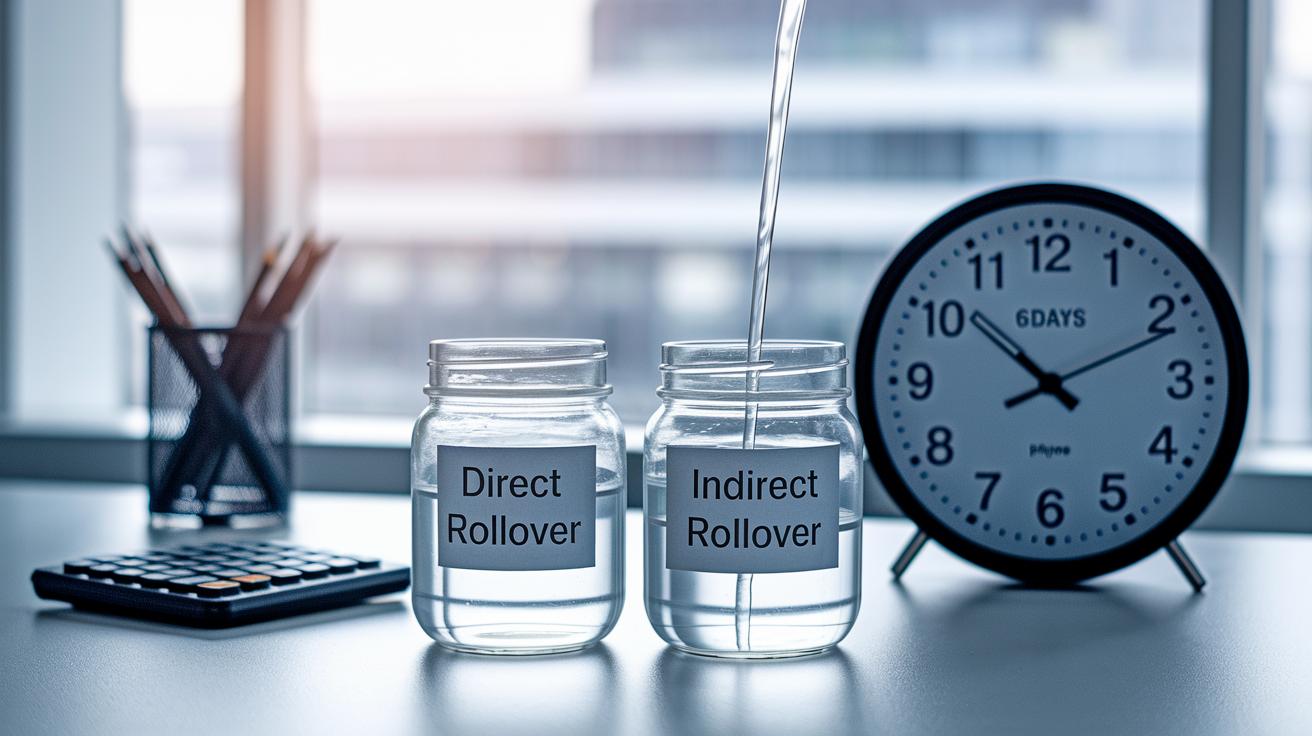
When you're ready to move your retirement money, there are a couple of easy choices that let your funds keep working for you without hitting you with taxes right away. One option is a direct rollover. This means your money goes directly from one retirement account to another without ever landing in your hands, keeping its tax-deferred status safe. But if you opt for an indirect rollover, you'll receive the funds and then need to deposit them into another qualified retirement account within 60 days. Think of it like carefully pouring water from one container to another. Missing that 60-day window can lead to tax bills and penalties, so timing is key.
Another path to consider is a Roth conversion. This is where you move money from a traditional retirement account to a Roth account. In doing so, you pay tax on the amount converted during that year. However, once it's in the Roth account, your investments can grow tax-free and you can eventually withdraw the money without extra taxes, if you follow the rules. It's like paying a one-time fee now to earn tax-free benefits later, which can be a smart move if you expect your tax rate to be higher when you retire.
Final Words
In the action, we compared employer-sponsored and individual savings options. We broke down key retirement accounts such as 401(k), Traditional IRA, Roth IRA, and SEP IRA. Each option was explained with simple terms, highlighting benefits like tax-favored savings and catch-up contributions. This overview helps simplify your choices by presenting clear features and limits. With the guidance provided, you can confidently take steps toward optimizing your retirement planning and securing a brighter financial future.
FAQ
What are the different types of retirement accounts and their tax implications?
The various retirement accounts include employer-sponsored plans, individual accounts, and pension plans. Each type features specific tax benefits like pre-tax contributions or tax-free withdrawals based on the account rules.
What are the best retirement plans for young adults and individuals?
The best retirement plans for young adults and individuals often mix employer-sponsored options, like 401(k)s with matching contributions, and personal accounts such as IRAs, which allow for flexible tax advantages and growth potential.
What types of retirement plans are offered by employers, such as 401(k)s and pension plans?
Employers offer plans like 401(k), 403(b), 457(b), and SIMPLE IRA. These are designed with features like tax-deferral and matching contributions, while traditional pensions can provide a set income stream after retirement.
What do retirement account companies like Fidelity offer?
Companies like Fidelity manage a range of retirement accounts, emphasizing low fees, a broad selection of investments, and helpful planning tools to assist you in building a secure retirement fund.
Can I retire at 62 with $400,000 in my 401(k)?
Retiring at 62 with $400,000 depends on your expected expenses and available income sources. It might be enough for some, but thorough budgeting and an analysis of your overall financial picture are essential.
Is it better to have a 401(k) or an IRA?
Deciding between a 401(k) and an IRA comes down to factors like employer contributions, investment options, and tax preferences. Comparing these features helps you choose the account that best supports your retirement strategy.
How much will $10,000 in a 401(k) be worth in 20 years?
Calculating the worth of $10,000 in 20 years relies on the assumed rate of return. With consistent growth, your investment could multiply significantly, boosting your overall retirement savings over time.